
Art Thessaloniki 2026:
A Fair Defined by International Exchange
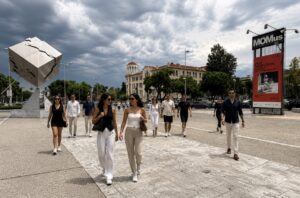
As the international art world continues to navigate shifting cultural, social and economic realities, art fairs increasingly serve not only as marketplaces but also as platforms for dialogue, experimentation and collaboration.
The 9th Art Thessaloniki International Contemporary Fair 2026 demonstrated precisely this evolving role. Bringing together galleries, artists, collectors, curators, museum professionals and cultural institutions from across Europe and beyond, the fair once again positioned itself as one of the most dynamic contemporary art events in Southeast Europe.
More importantly, however, Art Thessaloniki revealed a growing capacity to foster meaningful cultural exchange beyond the traditional exhibition model.
Throughout the fair, visitors encountered a broad spectrum of artistic practices ranging from painting, sculpture and printmaking to conceptual and interdisciplinary projects.
Participants from Greece, Germany, Italy, France, North Macedonia, Bulgaria and other countries contributed to an atmosphere characterised by openness, curiosity and professional engagement.
For many galleries and artists, the value of Art Thessaloniki extended well beyond immediate commercial outcomes. Conversations with collectors, curators and institutional representatives frequently developed into discussions about future collaborations, travelling exhibitions and cross-border cultural initiatives.
This increasing emphasis on long-term professional relationships reflects a broader transformation within the contemporary art ecosystem, where networking and cultural exchange are becoming as important as sales.
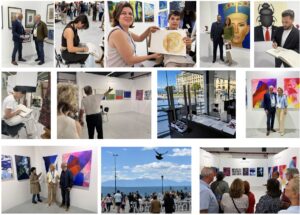
Artforum Hellas and Global Galleries: Creating Platforms for Dialogue
Among the organisations actively contributing to this broader cultural dimension were Artforum Hellas and Global Galleries.
Throughout the fair, both organisations demonstrated a shared commitment to supporting artistic visibility, international cooperation and critical cultural discourse.
Rather than limiting their participation to conventional exhibition activities, Artforum Hellas and Global Galleries developed a series of initiatives designed to stimulate conversation, encourage professional exchange and strengthen connections between artists, galleries, collectors and cultural institutions.
A central component of this engagement was the presentation of the pilot project NEW Feminism, featuring works by the three German artists Jana Dettmer, LEONI (A. Jäkel) and Corinna Zieleke. Conceived as an open platform for cultural dialogue rather than an ideological statement, the project explored contemporary female artistic perspectives and their relevance within today’s international cultural landscape.
The project encouraged discussions about participation, identity, equality and artistic freedom while fostering meaningful exchange among artists, collectors, curators, museum professionals and cultural decision-makers from different countries. In doing so, NEW Feminism demonstrated how contemporary art can contribute to constructive international dialogue and intercultural understanding.
This collaborative approach reflects a growing recognition that contemporary art requires not only exhibition opportunities but also sustainable frameworks for dialogue, documentation and international cooperation.
The activities were further supported by Winter Stiftung Hamburg, whose ongoing commitment to cultural exchange and artistic development contributed significantly to the realisation of several projects presented during the fair. Together, these initiatives highlighted the importance of cultural partnerships in strengthening international artistic networks and promoting cross-border exchange within the contemporary European art scene.
The Artforum Sketch Project: Preserving Artistic Processes
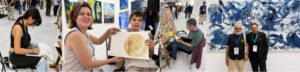
One simple but distinctive initiative introduced during Art Thessaloniki 2026 was the launch of the Artforum Sketch Project.
The project invites selected artists to contribute original sketches, visual notes and preparatory studies to a growing archive dedicated to artistic processes and creative development.
In an art world often focused on completed works and market-ready presentations, the Sketch Project shifts attention towards the intellectual and experimental stages of artistic production.
Visitors responded enthusiastically to the opportunity to engage with artistic thinking in its formative phases. The project highlighted how sketches frequently function as independent creative statements rather than merely preparatory material.
By documenting these often-hidden aspects of artistic practice, Artforum Hellas seeks to preserve an important dimension of contemporary cultural heritage while creating valuable resources for future exhibitions, publications and educational programmes.

Publications as Cultural Infrastructure
Another noteworthy aspect of the fair was the growing importance of publications as instruments of cultural mediation and artistic visibility.
Several new monographs, catalogues and artist publications were introduced during the event, reflecting a wider trend towards deeper contextual engagement with artistic practice.
For artists and galleries alike, publications increasingly serve as long-term cultural documents that extend the lifespan and reach of exhibitions beyond the duration of a fair.
The strong interest shown by visitors, collectors and cultural professionals confirmed that the demand for thoughtful artistic documentation remains significant.
Contemporary Art as a Space for Conversation
Beyond individual projects and exhibitions, Art Thessaloniki 2026 revealed an encouraging willingness among participants to engage with broader cultural questions.
The project’s relevance was further reflected in the strong interest shown by a broad spectrum of artists, collectors, curators, museum professionals and cultural decision-makers from across Europe and beyond.
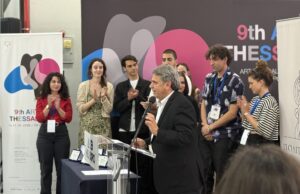
Among those engaging with the project and its underlying themes were curator and art historian Manos Stefanidis, museum director Mice Jankulovski, art professor Yiannis Fokas, artists Panagiotis Tanimanidis, John Kyvra and Girgis Saratsis, Giorgos Katsigras, Christos Lahanas, Emmanouela Liagkou and Panagiotis Papadimitropoulos, Erik Kling, Reinmar Bartl (Opy Zouni Award 2026), young talent Nikophoros, art professionals Rosalba Di Perro, Alberto Perobelli, Vladimir Ilev,Noor Aburayyan, George Jordan, Nikos Kroupis, Minas Kosmidis, Romeo Martus, Jacob Abraham, Thaleia Maria Alexaki, Dimitra Koumanaki and cultural professionals such as Pantelis Tsatsis, Eleni Vretta Fotiadou, Eva Apostolidou,.
International cultural exchange was further supported through the engagement of Miami-based art influencer and gallerist Aura Copeland, whose interest in the project contributed to expanding transatlantic dialogue and visibility.
While representing diverse artistic positions, cultural backgrounds and professional perspectives, their collective response underscored the project’s potential as a platform for future international collaboration and contemporary cultural exchange.
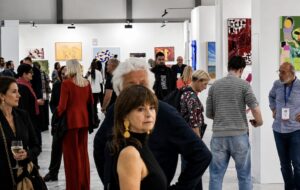
Visibility Beyond the Fair
The impact of Art Thessaloniki 2026 has continued well beyond the closing days of the exhibition.
The fair’s impact continued beyond the exhibition halls through follow-up reports, artist features, photographic documentation and digital communication initiatives published by participating organisations and exhibitors.
Continued circulation of these reports will reflect not only the growing visibility of participating artists and galleries but also the expanding relevance of Art Thessaloniki within the broader European contemporary art landscape.

Looking Forward
Art Thessaloniki 2026 demonstrated that contemporary art fairs can successfully function as cultural ecosystems where exhibitions, publications, dialogue, research and international collaboration intersect.
The active engagement of organisations such as Artforum Hellas, Global Galleries and Winter Stiftung Hamburg illustrates how independent cultural actors can contribute meaningfully to the development of sustainable artistic networks and international exchange.
The positive response from artists, galleries, curators and cultural institutions, together with a number of follow-up discussions, invitations and potential collaborative projects, indicates that the exchanges initiated in Thessaloniki are likely to generate lasting professional and cultural connections beyond the fair itself.
In this sense, the true legacy of Art Thessaloniki 2026 may not be measured solely by attendance figures or sales results, but by its ability to create lasting connections between artists, institutions and audiences across cultural boundaries.
LS/-